
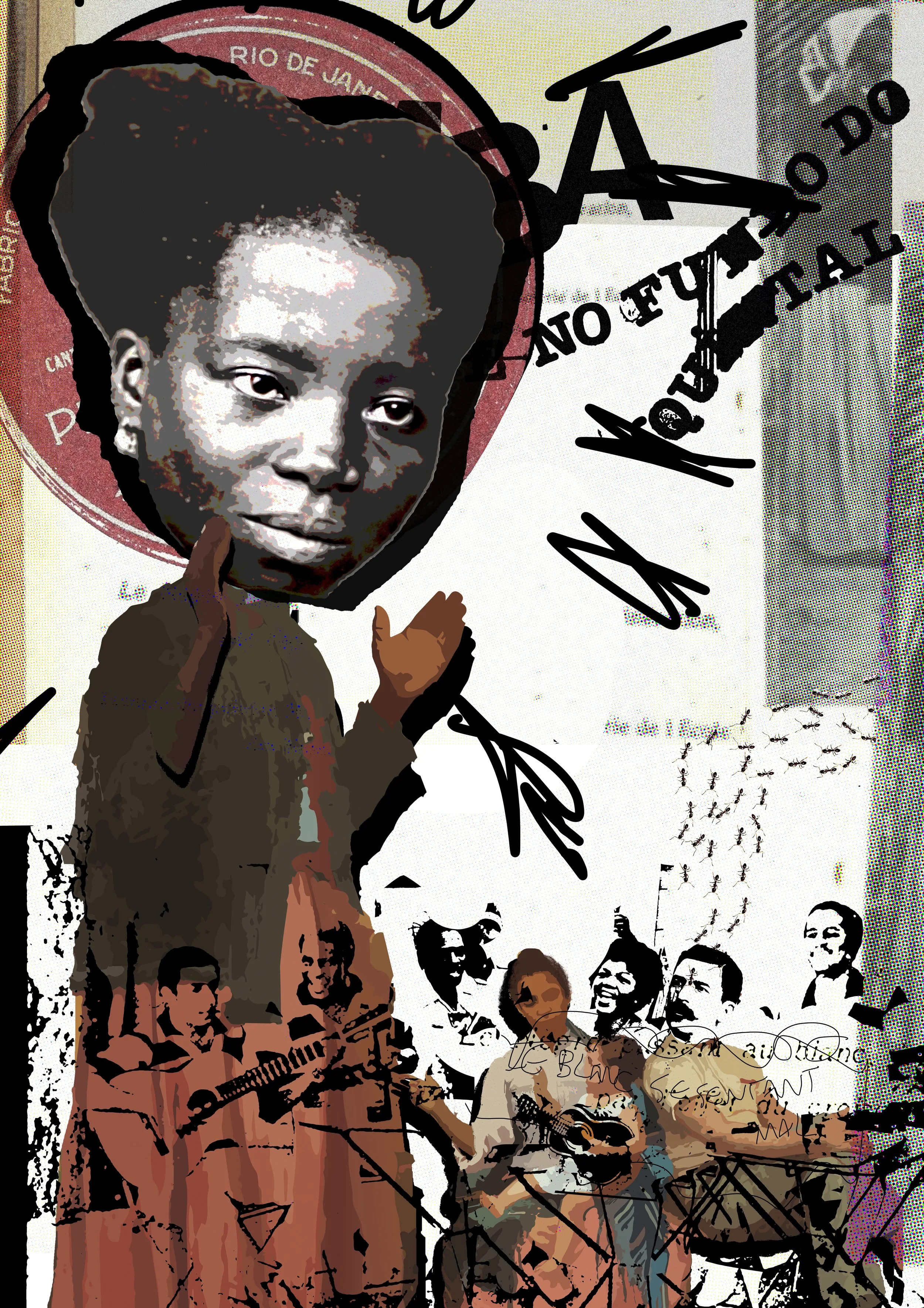
MENDES, Lucas. Contracanto. 2026. Digital photomontage, pigment print on canvas, 59.4 × 84.1 cm. Series: Neoantropofagia.
ON
REDEMPTION’S
OFFBEAT
Português · English · Neoantropofagia
In Modesto Brocos’s A Redenção de Cam (The Redemption of Ham), the family scene contains a blueprint for the nation. Painted in 1895, the work traces a progression toward whiteness through grandmother, mother, and grandson: the Black woman raises her hands before the white child, turning the intended disappearance of her own features into an expression of gratitude. The violence of that promise finds shelter in a domestic scene, orderly and seemingly peaceful. This relationship between pictorial composition and a racial project is examined in Tatiana Lotierzo’s research on the painting.
It was this arrangement I chose to disobey. I enlarged the portrait traditionally identified as Tia Ciata and superimposed it over the grandmother. Her presence changes the hierarchy of the scene: the face grows, meets the viewer’s gaze, and begins to guide the reading. The figure meant to celebrate her own erasure becomes a powerful reference point for creation, encounter, and continuity.
The record label for Pelo Telefone and the images associated with Fundo de Quintal and Dona Ivone Lara bring different moments in samba’s history together. They form a genealogy made of voices, repertoires, and relationships. In the montage, transmission between generations rests on the ability to create a culture and keep it circulating. The backyard enters the picture with its own way of making history.
The presence of Wenceslau Braz introduces another contradiction. According to the account preserved by Casa da Tia Ciata, she is said to have treated a wound on the president, securing benefits for her family and protection for the gatherings in her home. What interests me is the circuit of need, prestige, and favor the story exposes: power turns to Black knowledge while the safety of those who hold that knowledge remains subject to an authority’s discretion. In the image, ants crawl across the presidential figure. It is a small nod to still-life painting and to the frailty of this body invested with power.
The words also change course. The historical caption “Le Nègre passant au blanc”—“The Black man turning white”—receives a reply: “Le Blanc se sentant mal,” the white man feeling unwell. The wordplay refers to the president’s illness and, within the montage, extends to the discomfort of an order that imagined itself the measure of health, civilization, and the future. The solemn French of the racial thesis comes back as malaise.
Layers, shifts in scale, halftone patterns, and scribbles keep this struggle visible. Academic painting coexists with the graphic language of records; the caption receives a handwritten intervention; the official portrait loses its composure amid ants and stains. Samba crosses the scene that celebrated the disappearance of Black people and changes its plot. I want the painting to remain recognizable enough for viewers to see what has been disobeyed.