
Brumadinho: Summary Cards


Português · English · Communication and research
Who can bear the cost of waiting? Taking Sermão da Barragem as its starting point, this carousel follows the Brumadinho case: the start of the hearings, access to records, conditions for participation, and the different avenues for redress.
Updated October 15, 2026. The dates and procedural stages described reflect that point in time. The original Portuguese carousel appears above; its complete English text follows below.
Read the full article → · Read the press bulletin →
The eight slides in English
1/8 — Brumadinho and the cost of waiting
The dam collapsed in 2019. Its consequences continue in the lives of those affected. In dialogue with Sermão da Barragem, a question: who can endure the years before a judicial response?
Source: Federal Court in Minas Gerais — decision accepting the charges and organizing the proceedings.
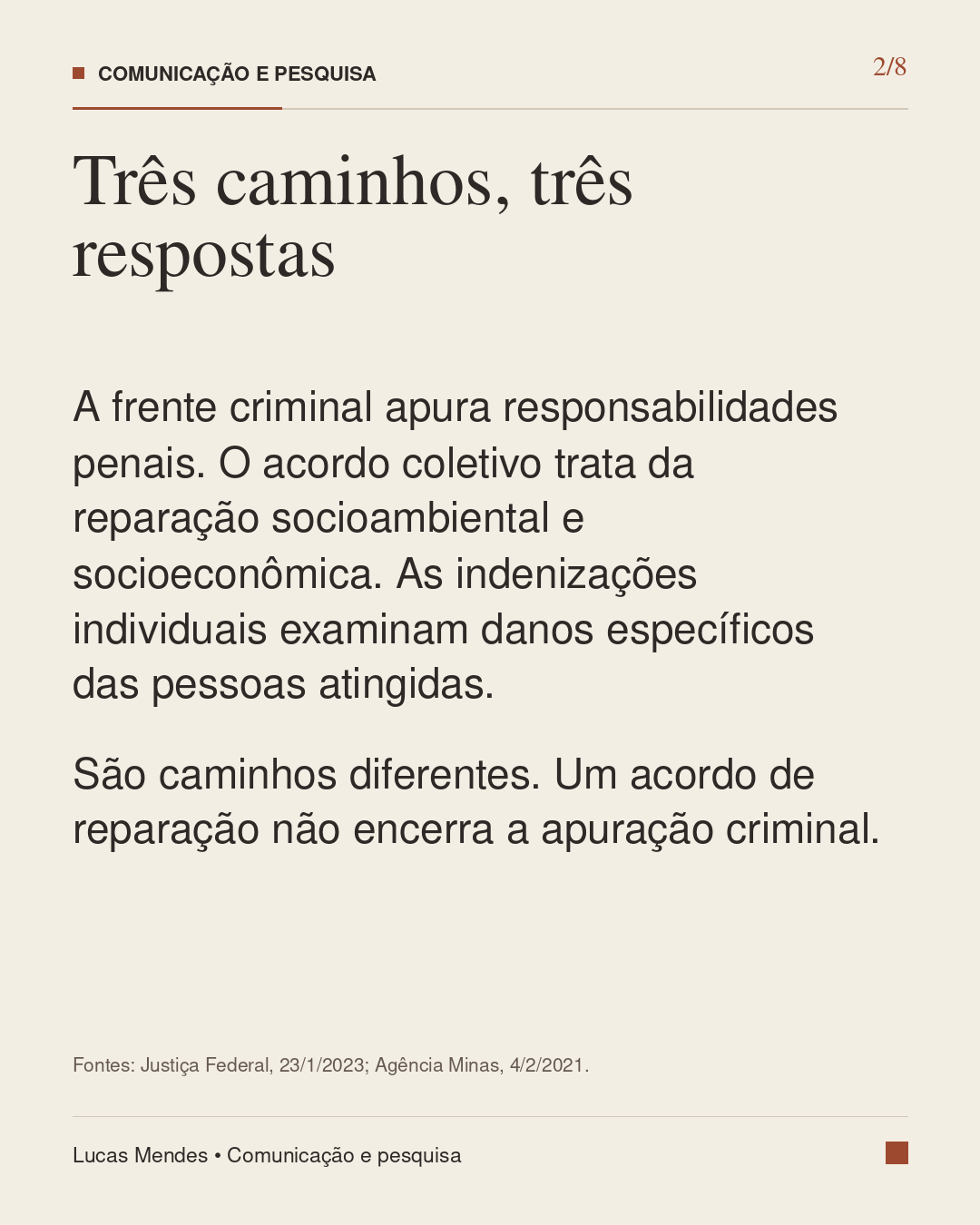
2/8 — Three paths, three responses
The criminal proceedings examine criminal responsibility. The collective settlement addresses social, environmental, and socioeconomic redress. Individual compensation claims examine specific harm suffered by those affected. These are different paths. A reparation agreement does not bring the criminal proceedings to an end.
Sources: Federal Court in Minas Gerais — decision accepting the charges and organizing the proceedings; Agência Minas — preservation of individual and criminal proceedings.
3/8 — Seven years before the hearings
The evidentiary hearings began on February 23, 2026, more than seven years after the collapse. This is the stage for hearing testimony and producing evidence. The schedule consulted lists sessions through September 2027. It does not set a date for a judgment or jury trial.
Sources: Agência Brasil via O Dia — start of the hearings; TRF6 — official hearing schedule.
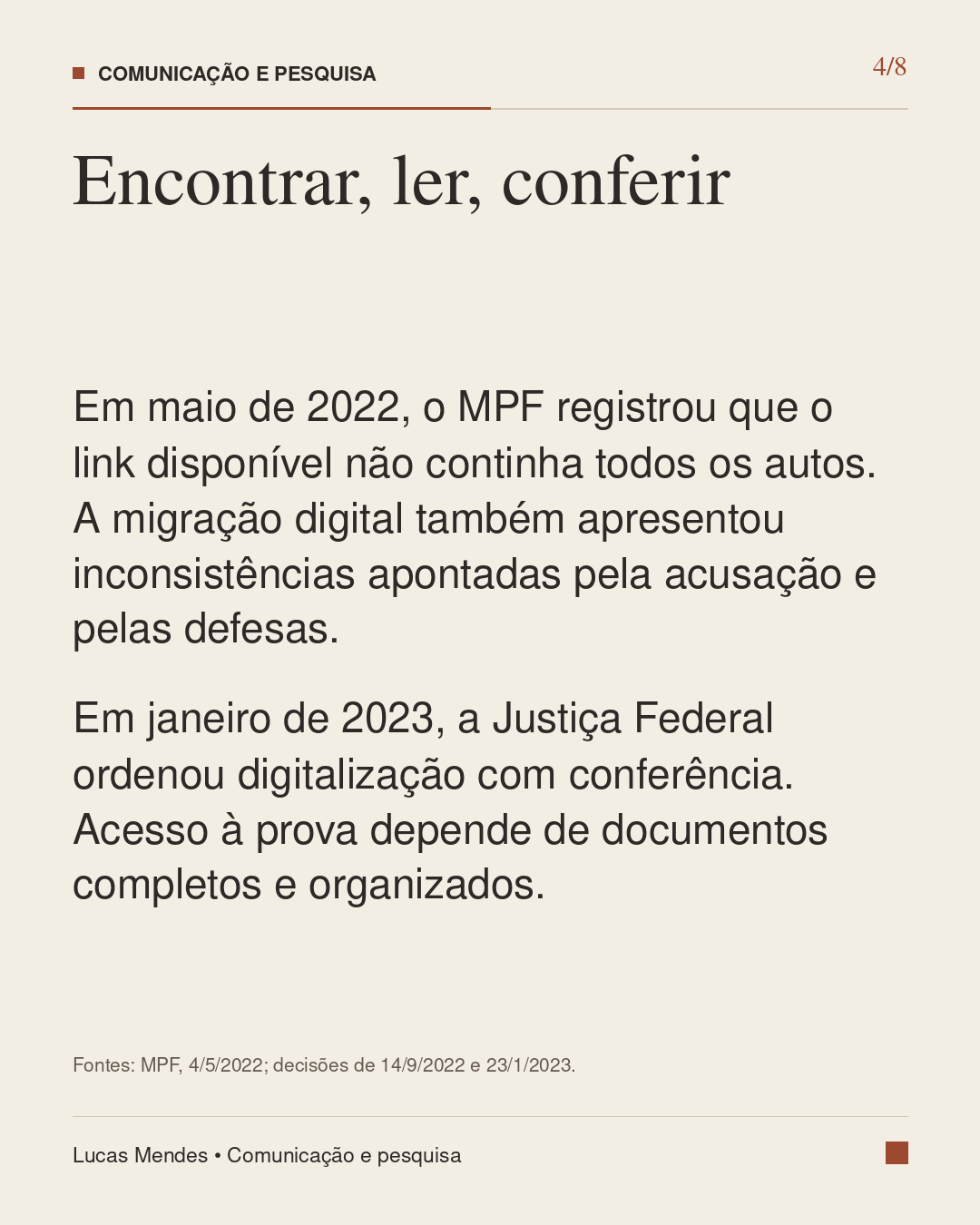
4/8 — Find, read, verify
In May 2022, the Federal Public Prosecutor’s Office (MPF) reported that the available link did not contain the complete case file. The digital migration also had inconsistencies identified by the prosecution and defense teams. In January 2023, the Federal Court ordered digitization with verification. Access to evidence depends on complete, organized records.
Sources: MPF — request for copies and digitization of the case file; State court — decision on digitization of the case file; Federal Court in Minas Gerais — decision accepting the charges and organizing the proceedings.
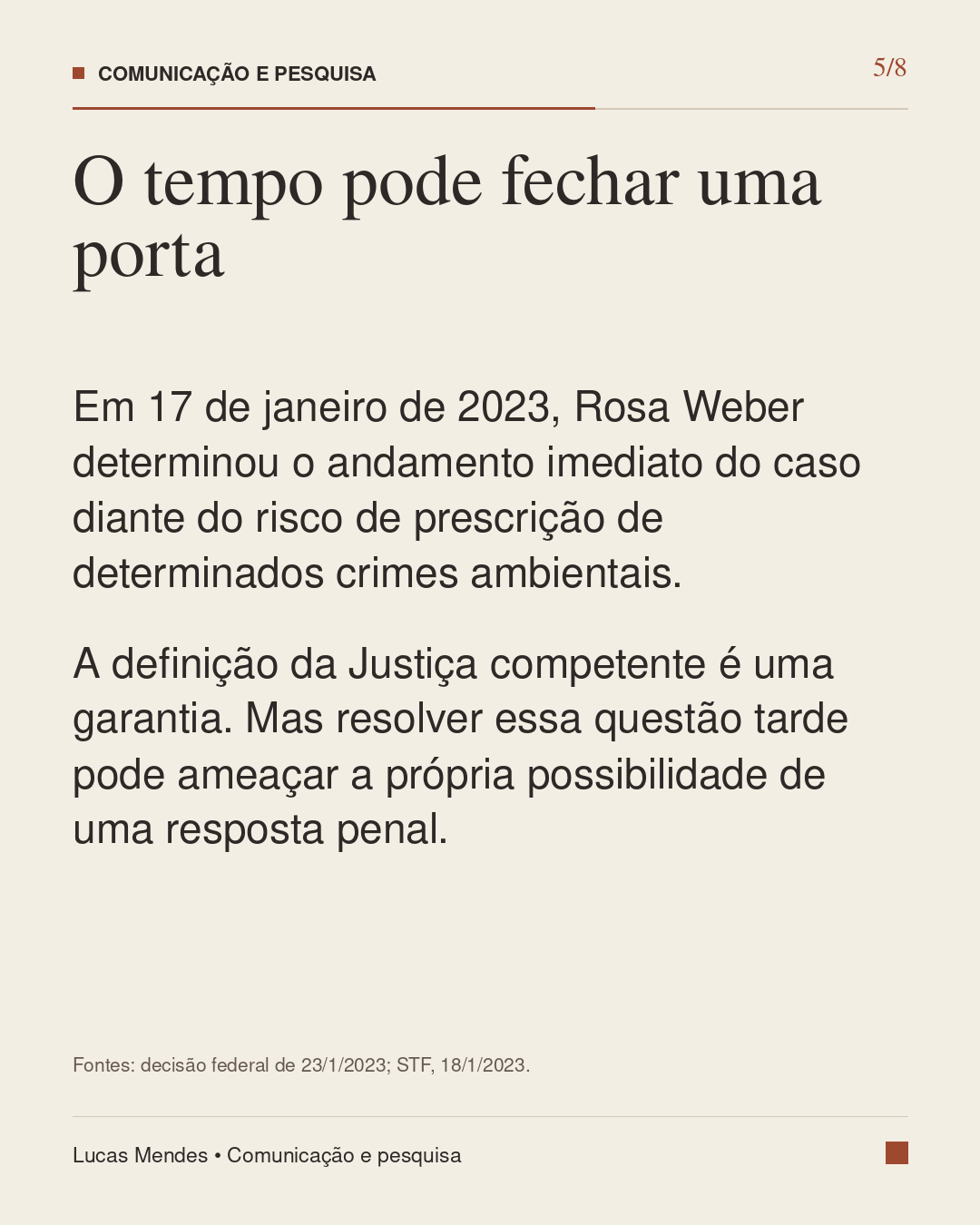
5/8 — Time can close a door
On January 17, 2023, Justice Rosa Weber ordered the case to proceed immediately because certain environmental offenses risked becoming time-barred. Determining the court with jurisdiction is a procedural safeguard. Yet resolving that question late can threaten the very possibility of a criminal justice response.
Sources: Federal Court in Minas Gerais — decision accepting the charges and organizing the proceedings; Supreme Federal Court — order for the case to proceed immediately in federal court.
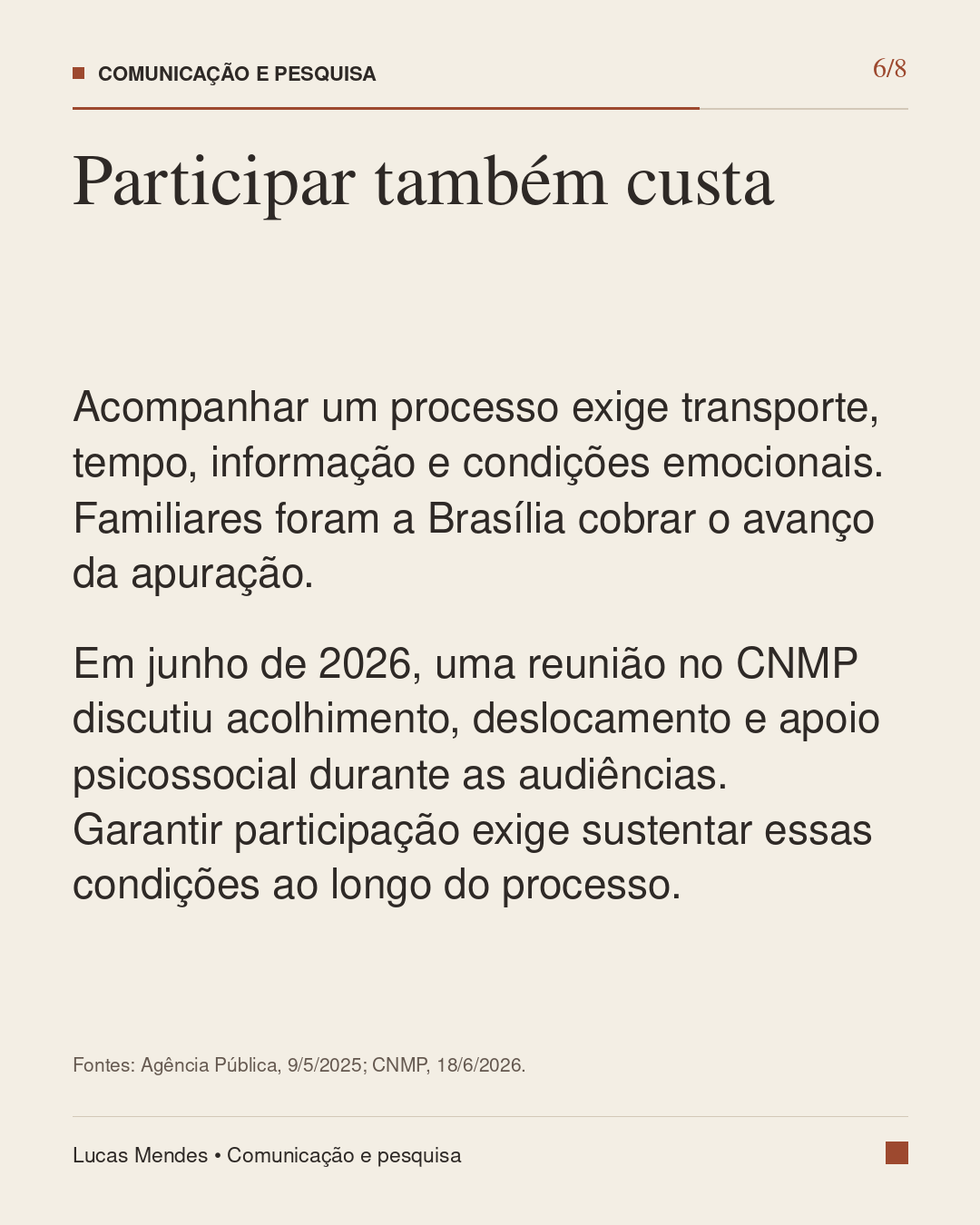
6/8 — Participation also has a cost
Following legal proceedings requires transportation, time, information, and emotional capacity. Victims’ relatives went to Brasília to demand progress in the investigation. In June 2026, a meeting at the National Council of the Public Prosecutor’s Office (CNMP) discussed care arrangements, transportation, and psychosocial support during the hearings. Ensuring participation means sustaining these conditions throughout the proceedings.
Sources: Agência Pública — victims’ relatives demand accountability in Brasília; CNMP — meeting with relatives at the Observatory of High-Profile Cases.
7/8 — Rules that preserve rights
In Repetitive Appeal Theme 1280, the Superior Court of Justice (STJ) applied the Consumer Protection Code’s five-year limitation period to Brumadinho compensation claims and recognized that collective actions concerning the same event interrupt that period. The rule can preserve access to redress. It does not establish a single final deadline for every victim.
Sources: STJ — official record for Repetitive Appeal Theme 1280; STJ — victims treated as consumers and the limitation period for compensation claims.
8/8 — Who supports those who wait?
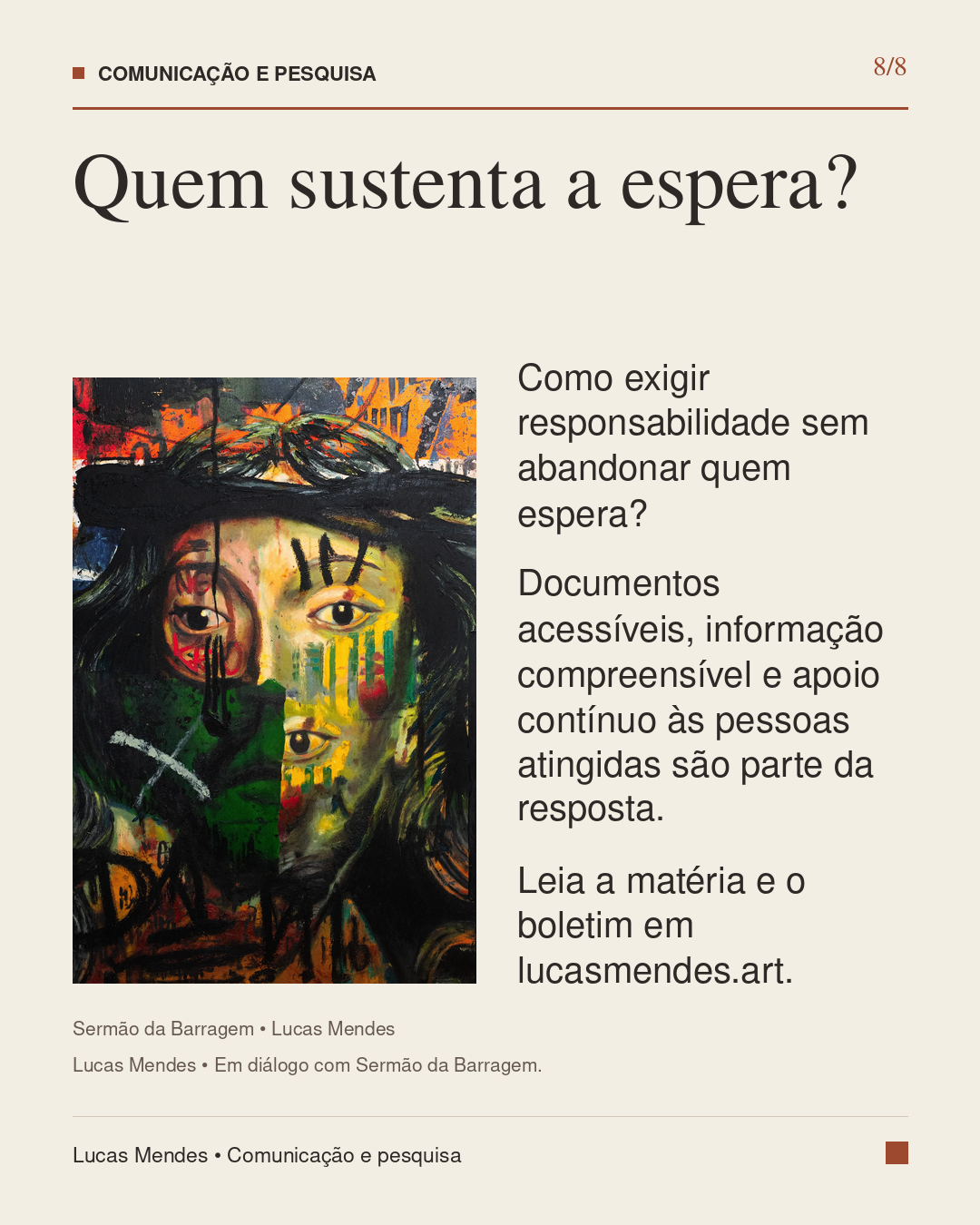
How can we demand accountability without abandoning those who wait? Accessible records, understandable information, and continuing support for those affected are part of the answer. Read the article and bulletin in Communication and research.
Sources: TRF6 — hearing information page; CNMP — meeting with relatives at the Observatory of High-Profile Cases.