
Brumadinho and the Cost of Waiting
Português · English · Communication and research
Between the tragedy and a judicial response, access to information and support for victims’ families become essential parts of the pursuit of justice.
By Lucas Mendes • Communication and Research
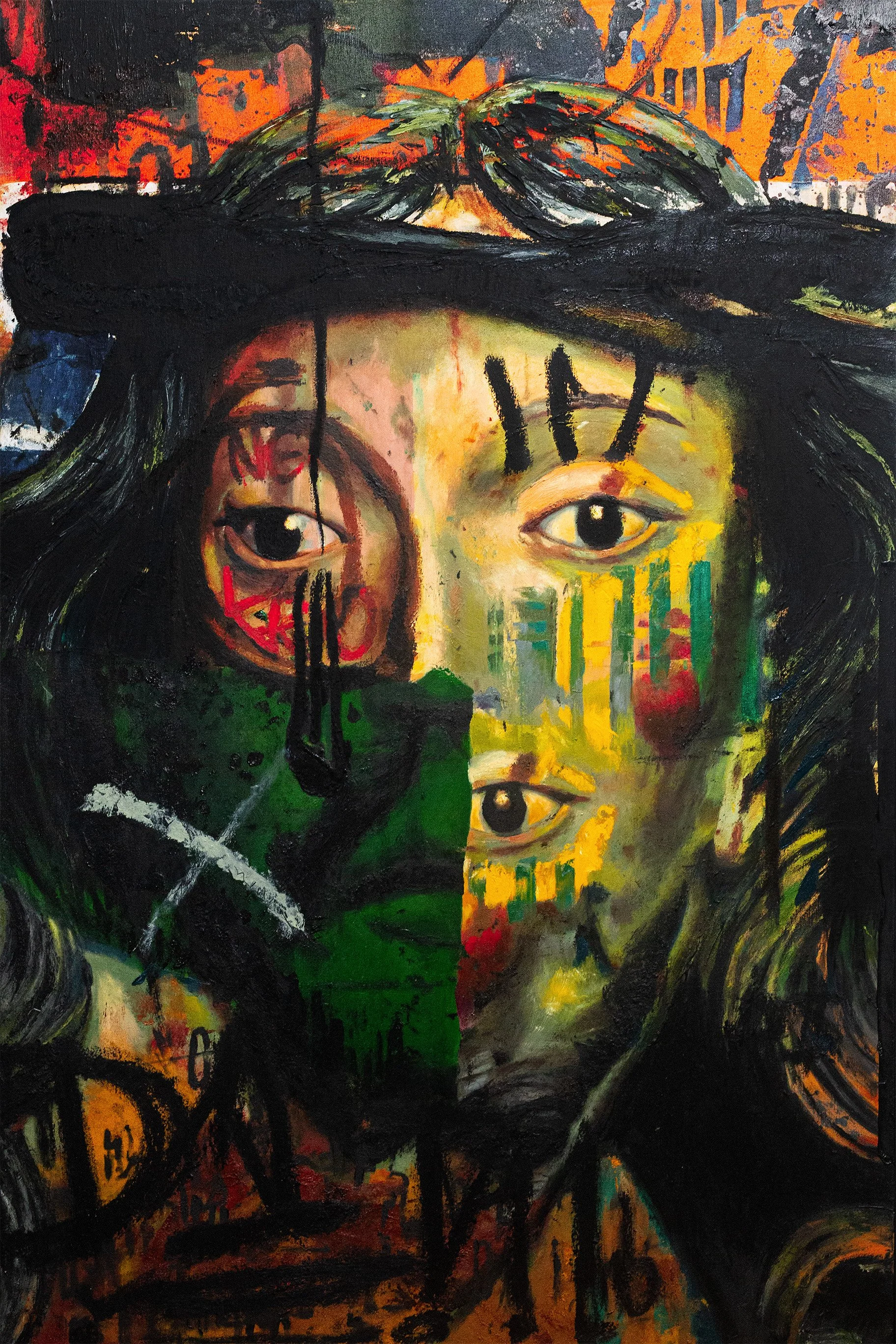
Sermão da Barragem (Lucas Mendes). The work was the starting point for research into how procedural rules and the conduct of judicial proceedings affect the delivery of justice for people affected by the Brumadinho disaster.
On February 23, 2026, more than seven years after the dam collapse in Brumadinho, hearings began in the evidentiary phase of the criminal proceedings. The schedule updated in September lists sessions through September 3, 2027. For victims’ families, following this process means remaining mobilized for years while living with their losses every day.
A judicial response follows its own timetable. When it takes years to develop and the case is serious, it also matters to ask what happens to those waiting for an answer. Long before a judgment or a final judicial pronouncement, then, being able to understand decisions and having the means to follow the proceedings should also be considered measures of justice.
In Sermão da Barragem, a “Jesus of Minas” is imagined as stunned by the scale of the tragedy and the inadequate protection of those affected. His astonishment extends to the distance between legal abstractions and the ethical imperatives that should guide the protection of life. The research accompanying the work takes this discomfort as its starting point to examine a concrete question: how the conduct of the proceedings can make the pursuit of justice more accessible and humane for victims’ families.
WHAT THE HEARINGS CAN DECIDE
The criminal proceedings are divided into three cases. One concerns the homicide charges against the individuals accused. The other two concern environmental crimes and include the companies Vale and TÜV SÜD, as well as individuals. The federal court ordered this separation in January 2023: the homicide case continued, while the environmental charges moved into separate proceedings.
The hearings that began in 2026 are part of the evidentiary phase, which is devoted to taking evidence, particularly testimony. In the homicide case, after this stage, the court will decide whether there are sufficient grounds to send the defendants to a jury trial. The last date on the hearing schedule is therefore neither the date of a jury trial nor an anticipated end date for the case.
This distinction matters in understanding the wait. The start of the hearings represents progress, but further decisions are required before any jury trial can take place. Explaining the scope of each stage allows families to follow what has actually changed and what remains unresolved.
HOW TIME BEGAN TO THREATEN THE PROCEEDINGS
The formal charges filed by the Public Prosecutor’s Office, known as the denúncia, had been accepted by the state court on February 14, 2020. The dispute over which court system should handle the case subsequently reached the higher courts. In December 2022, the Supreme Federal Court (STF) ruled that the case fell within federal jurisdiction and invalidated judicial decisions made at the state level, including the acceptance of the charges.
Determining the court with jurisdiction is part of procedural safeguards. In this case, however, the consequences created an additional urgency: invalidating those decisions placed some environmental offenses at risk of becoming time-barred—the loss, through the passage of the statutory period, of the ability to impose punishment for those offenses. The risk identified at that point did not concern the homicides or all of the environmental charges.
In January 2023, following a request from victims’ families, Justice Rosa Weber ordered the case to proceed immediately in federal court. On January 23, the federal court ratified the acceptance of the charges and ordered the environmental cases to be separated.
This episode shows why the duration of proceedings deserves attention beyond counting the years. Time can affect the very possibility of accountability. For the families, understanding that risk was also a condition for demanding action to keep the proceedings moving.
FOLLOWING THE CASE DEPENDS ON ACCESS
Preserving the possibility of a decision, in turn, requires that the case file be available for examination. In a case with a large volume of documents, the organization of the records affects the working conditions of both the prosecution and the defense teams.
In a May 2022 filing, the Federal Public Prosecutor’s Office reported that the link available for consultation did not contain the full case file. It requested access to the physical records so it could make digital copies and analyze the evidence. In September, a judicial decision recorded inconsistencies in the migration to the electronic system that had been identified by prosecutors and several defense teams.
When the federal court received the case in January 2023, it ordered all 84 volumes to be digitized and each digitized volume to be checked, along with material stored on media. These records document difficulties and the measures ordered to address them. They do not establish that those difficulties account for the entire delay in the case, or that they persist today.
Their relevance to the pursuit of justice is direct: debating a piece of evidence depends on being able to locate it and verify its contents. Careful handling of documents supports both the proceedings and the right to a defense. For those following the case from outside, public communication needs to offer equivalent guidance: explaining the current stage of the proceedings and what will be decided next.
WHO CAN STAY INVOLVED FOR SO MANY YEARS
Even when information is available, following lengthy criminal proceedings requires resources, both material and emotional. In a January 2026 interview with Agência Pública, Helena Taliberti, who lost her children in the collapse, explained that distance and cost prevented frequent trips to Brumadinho. Speaking about her losses, she summed up their enduring effects: “The tragedy is every day.”
Her account helps explain what a court calendar cannot show. Each new session takes place within a life that still demands work and care. Being present may depend on transportation and availability; staying involved over the years may also require support to face the suffering that the proceedings bring back.
In June 2026, this concern was raised at a meeting between AVABRUM and representatives of the CNMP and CNJ. They discussed the care and psychosocial support measures implemented by the Federal Regional Court of the 6th Region (TRF6), as well as transportation arrangements for the families. The association acknowledged the importance of these initiatives and expressed concern about their continuity throughout the proceedings.
Continuity is decisive. If the evidentiary phase extends over many months, support needs to last as long. Participation depends on families being able, throughout the process, to make use of the access they are offered.
The TRF6 hearings portal brings together the schedule and guidance on following the proceedings. Publishing this information is a meaningful step. It becomes more effective when changes are clearly explained and channels exist to resolve the difficulties faced by people wishing to participate.
It is in this everyday operation that the ethical question raised by Sermão da Barragem meets the judicial process. The proceedings must uphold their safeguards and provide a reasoned response; along the way, institutions must also take responsibility for caring for those who suffered the losses. Making the process understandable and sustaining families’ participation are concrete ways of fulfilling that duty.
The dignity of those who wait is also decided before judgment.
Future dates reflect the court schedule updated on September 10, 2026, and are subject to change. Last updated: October 19, 2026.
Continue reading: Brumadinho in the News · Summary cards · View the newsletter introduction · View the artwork and read the literary text.