
Herzog and the Time of Truth
Português · English · Communication and research
The distance between the 1978 judgment and the corrected death certificate of 2013 reveals how much can remain undone after the state acknowledges an act of violence.
By Lucas Mendes • Communication and Research
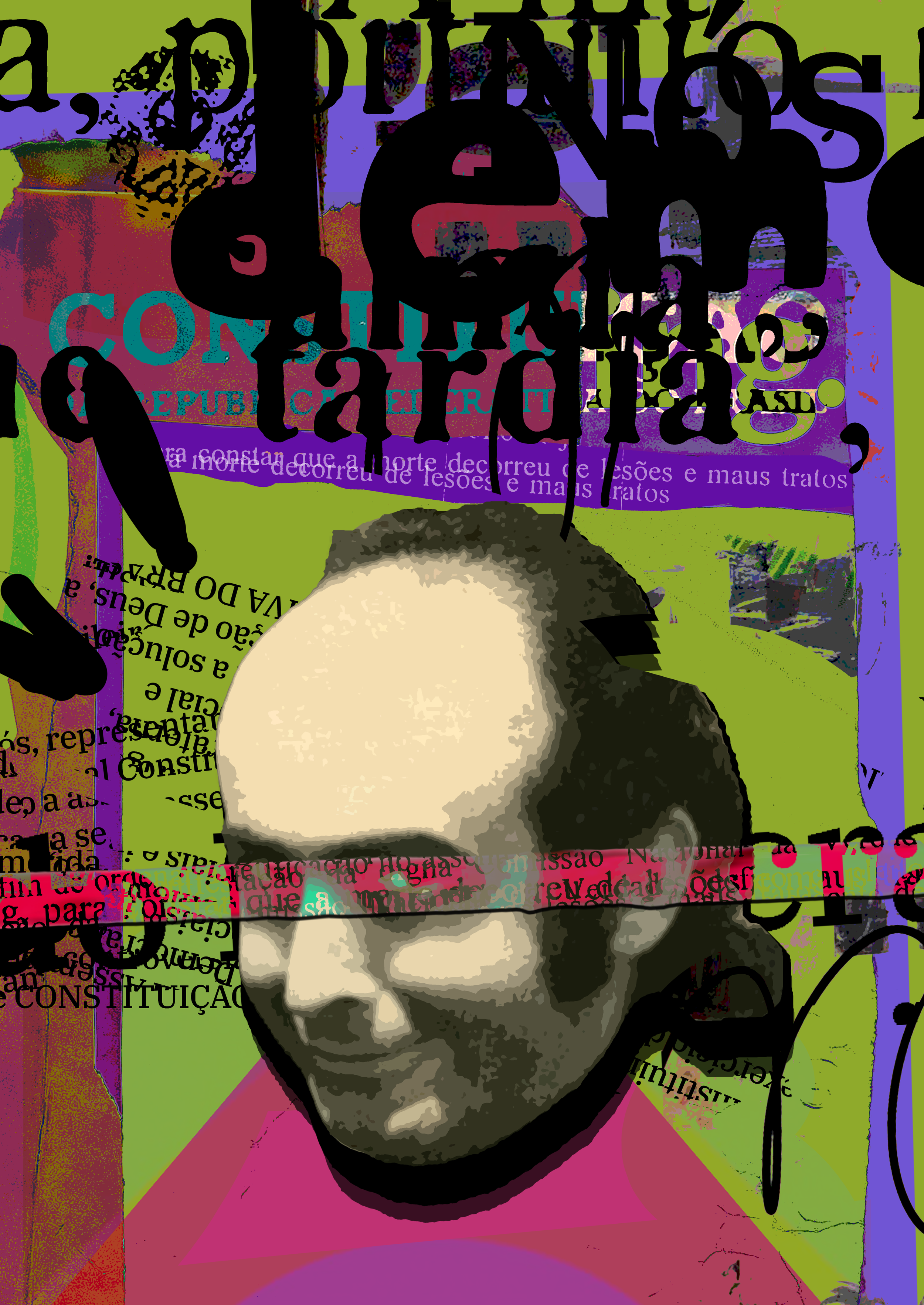
Preâmbulo nº 3 (Lucas Mendes). The delay in correcting the record of Vladimir Herzog’s death is the starting point for the artwork and this research into the limits of official acknowledgment of violence.
On March 15, 2013, Vladimir Herzog’s family received a death certificate that no longer upheld the account of suicide put forward by the dictatorship. The journalist had been tortured and murdered on October 25, 1975, at São Paulo’s DOI-CODI, an agency of political repression. More than 37 years separated his death from the delivery of that document.
The federal government’s responsibility, however, had already been recognized in court in 1978. This discrepancy lies at the heart of the matter: how can a truth acknowledged in one ruling remain absent from another document issued by the same state? The family had challenged the false account and obtained a favorable judgment. Even so, correcting the record required a further initiative, decades later.
That delay was my starting point for Preâmbulo nº 3. I took the phrase “ainda que tardia”—“however belated”—from the ruling ordering the correction and enlarged it at the top of the image. Legal discourse acknowledged the delay with composure. In the work, I sought to give a sense of scale to the time lived by those who had to wait.
To understand what that wait means, we need to distinguish what each response by the state actually accomplished.
A Favorable Judgment, a Record Still False
The original record gave “mechanical asphyxiation by hanging” as the cause of death. That wording corroborated the account of suicide fabricated by agents of repression. The falsehood thus acquired the authority of a public document: it could continue to be presented and consulted even after it had been disproved.
On October 27, 1978, federal judge Márcio José de Moraes issued a judgment in the lawsuit brought by the family, recognizing the federal government’s responsibility for Herzog’s unlawful detention, torture, and death. This was a civil judgment concerning state responsibility. It did not criminally convict the agents involved, nor did it change the death record at that time. This history is reconstructed in the judgment of the Inter-American Court of Human Rights.
The existence of separate proceedings helps explain why one measure did not automatically bring about the other. That separation, however, had a concrete effect: a family could hold judicial acknowledgment of the violence while also living with a record that preserved the account used to conceal it. Brazil’s return to democracy and the 1988 Constitution did not, by themselves, bring about the correction.
Why the Words on the Certificate Mattered
In 2012, the National Truth Commission submitted a request for correction to the courts, supported by a request from Clarice Herzog and the earlier rulings. On September 24, Judge Márcio Martins Bonilha Filho ordered the recorded cause to state that the death had resulted from injuries and mistreatment suffered on DOI-CODI premises.
Even that wording did not pass through the proceedings unchallenged. The São Paulo State Public Prosecution Service appealed to remove the reference to injuries and mistreatment, arguing that it did not comply with the requirements of the Public Records Act. The Office of the State Prosecutor General itself opposed the appeal. On December 12, 2012, judicial inspector José Renato Nalini upheld the correction.
The dispute concerned more than the wording of a form. Removing those words would affect the document’s ability to name the violence Herzog had suffered. By upholding the correction, the ruling rejected an interpretation of registration formalities that would sacrifice the record’s correspondence with the facts. The controversy shows how the interpretation of a rule can broaden or restrict the acknowledgment owed to victims.
The delivery of the certificate to the family in March 2013 made that achievement tangible. The false account no longer occupied that official space. The corrected document did not restore the years that had passed, but it ended a persistent form of disrespect.
What the Correction Did Not Resolve
Correcting the certificate addressed the falsehood in the record. The criminal investigation had a different purpose: to establish the individual responsibility of those who committed the crime. One measure did not replace the other. The delivery of the certificate in 2013 therefore cannot be read as the conclusion of the case.
In its judgment of March 15, 2018, the Inter-American Court held Brazil responsible for failing to investigate, bring to trial, and punish those responsible, and ordered measures to pursue the investigation. The ruling examined the state’s international responsibility for its omissions; it did not constitute individual criminal convictions of the torturers.
This new milestone helps clarify the limits of the earlier ones. The acknowledgment of civil responsibility and the corrected certificate were real achievements for the family. Even so, the lack of an effective criminal justice response remained a matter for which the state was being called to account. A truth admitted in a document does not automatically bring about all the consequences the state has a duty to ensure.
A New Correction, Now Through a National Procedure
The history of the record took another turn. National Council of Justice Resolution 601/2024 established a free procedure for issuing or correcting death records for people officially recognized as having died or disappeared for political reasons. In cases covered by the resolution, the process follows an administrative route, with the involvement of the Special Commission on Political Deaths and Disappearances, without requiring each family to bring an individual lawsuit.
Herzog was among those whose certificates were delivered in São Paulo on October 8, 2025. This was not the first correction: the one made in 2013 had already removed the earlier wording. The new standard explicitly identified violent death caused by the Brazilian state in the context of political persecution. The change deepened the documentary acknowledgment and gave it a common procedure.
The significance of this measure also lies in the effort it may spare families. Naming an act of violence that has already been officially acknowledged should not require a solitary struggle each time a new record is issued. The administrative procedure gives practical effect to the earlier acknowledgment and can prevent the pursuit of an accurate record from becoming yet another prolonged dispute.
The Time a Document Cannot Restore
Herzog’s story rules out a comfortable reading of the delay. Time did not pass only between the crime and the discovery of the truth. It also passed after the violence had already been acknowledged, while the family had to pursue further measures to give that acknowledgment practical effect.
In Preâmbulo nº 3, fragments of the ruling cross the journalist’s eyes. The text acknowledging the violence interrupts our encounter with the face of the person who suffered it. This is the discomfort I seek to keep in view: the correction matters, but it arrives burdened with the time it cannot restore.
A sentence can acknowledge a delay with composure. Those who had to wait had to live through every moment of it.
Updated October 19, 2026. Sources are linked throughout the text.
Continue reading: Herzog in the News · Summary cards · View the introductory newsletter · View the artwork and read the essay.